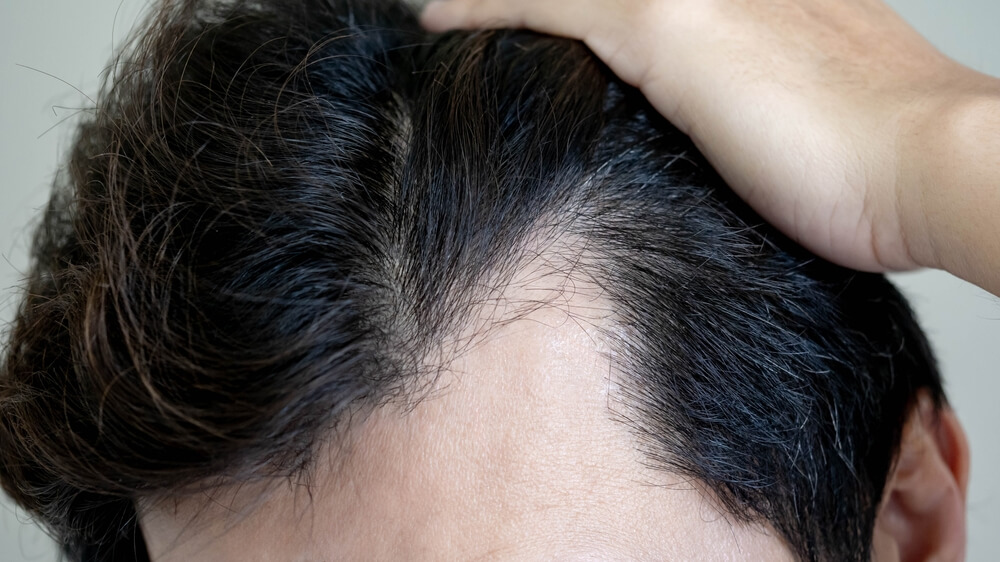
Exosome Hair Restoration in Fairfax, VA
Hair loss rarely happens for just one reason. Genetics, hormones, inflammation, stress, nutrition, aging, medications, and overall health can all influence the way a hair follicle grows, and understanding those factors can make a meaningful difference in how hair loss is treated. At NOVA Concierge Medicine & Aesthetics in Fairfax, Virginia, our approach to hair restoration combines that medical understanding with some of the most exciting advances in regenerative medicine. One of those advances is exosome hair restoration. Exosomes have gained significant attention for their ability to carry powerful cellular signals involved in repair, regeneration, and communication between cells. In hair restoration, the goal is to introduce these signals directly into areas of thinning hair to support follicular activity, improve the environment surrounding the follicle, and encourage healthier, stronger hair growth. For the right patient, it represents an exciting new direction in the way we approach thinning hair. Why Does Hair Begin to Thin? To understand hair restoration, it helps to understand what is actually happening underneath the scalp. Each hair grows from a living follicle that moves through its own biological cycle. During the anagen phase, the hair actively grows. Eventually, the follicle transitions through shorter phases before entering a resting period and shedding the hair so that the cycle can begin again. When this cycle is functioning normally, we continuously lose and replace hairs without noticing a significant difference in density. Hair loss develops when something begins interfering with that process. In androgenetic alopecia, one of the most common causes of hair thinning, the follicle gradually miniaturizes. A follicle that once produced a thick, pigmented strand begins producing a finer, shorter hair. Over time, each successive hair can become less substantial, and the scalp becomes increasingly visible. In other patients, excessive shedding may occur after illness, pregnancy, rapid weight loss, significant stress, nutritional deficiency, hormonal changes, or certain medications. And sometimes several of these factors are occurring simultaneously. This is why treating hair loss well requires more than simply looking at where the hair is thinning. What Are Exosomes, and Why Are They So Interesting for Hair Restoration? Exosomes are microscopic extracellular vesicles released by cells as part of the body’s natural communication system. Think of them as biological messengers. Inside these tiny vesicles are signaling molecules—including proteins, lipids, growth factors, and genetic material—that allow cells to communicate with one another and influence processes involved in repair, inflammation, and regeneration. That signaling capability is what has made exosomes such an exciting area of regenerative medicine. When used in hair restoration, exosome-based therapy is designed to deliver concentrated regenerative signals directly into the scalp and around existing hair follicles. Rather than simply treating the appearance of thinning hair, the goal is to influence the biological environment in which the follicle is functioning. Research is exploring how these signals may support pathways associated with follicular activity, tissue repair, inflammation, and the hair-growth cycle. For patients who still have viable follicles but are beginning to notice thinning, miniaturization, or loss of density, this creates an exciting opportunity: supporting the follicle while it is still there. The Earlier We Support a Struggling Follicle, the Better the Opportunity This is an important concept in hair restoration. A thinning hair and an absent hair are not necessarily the same thing. When you look at an area of early hair loss, many follicles have not disappeared. Instead, they may be producing increasingly fine, miniaturized hairs. Those follicles are particularly important because preserving and supporting existing follicles is one of the central goals of modern hair restoration. Once a follicle has been permanently destroyed, regenerative treatment cannot simply create a brand-new follicle in its place. That is one reason we encourage patients to evaluate persistent thinning earlier rather than waiting until hair loss becomes severe. You do not need to be losing handfuls of hair before your hair loss deserves attention. A widening part, decreasing ponytail density, greater scalp visibility, recession at the temples, or noticing that your hair simply does not feel as full as it did several years ago can all be reasons to take a closer look. Hair Loss Is Not the Same in Every Patient One of the most common mistakes in hair restoration is treating every patient with thinning hair as though they have the same condition. They don’t. A woman entering perimenopause with gradual thinning across her part may have a very different biological picture from a patient who suddenly begins shedding several months after an illness or major weight loss. Iron deficiency can contribute to shedding. Thyroid abnormalities can affect the hair cycle. Hormonal changes can influence follicular behavior. Rapid weight loss, inadequate protein intake, certain medications, metabolic conditions, inflammation, and significant physiologic stress can all play a role. Genetics matter enormously as well. And sometimes the answer isn’t one thing, it is several smaller factors converging at once. This is where the physician-led approach at NOVA becomes particularly important. We are not only asking, What can we put into the scalp? We are also asking, Why did the hair begin changing in the first place? A Medical Approach to Hair Restoration at NOVA At NOVA Concierge Medicine & Aesthetics, hair restoration begins with a detailed evaluation of your history, the timing and pattern of your hair loss, your scalp, medical conditions, medications, hormonal changes, nutrition, weight changes, stressors, and previous treatments. When indicated, we may also recommend laboratory testing to evaluate potential contributors such as iron and ferritin levels, thyroid function, nutritional status, metabolic health, or hormonal changes. Not every patient needs every test. The purpose is not to order a large panel of labs simply because someone is losing hair. The purpose is to use your history, examination, and pattern of hair loss to determine what deserves a closer look. That information helps us build a treatment plan that makes sense for your hair. For some patients, exosome therapy may be the primary regenerative treatment. For others, we may recommend PRP, PRF, topical or oral hair-loss